Surprise beats size
A reward you can predict stops registering once you've learned it's coming. An unpredictable one never stops. Slot machines are built on that gap.
The gamblification of focus
Your brain spends more dopamine on a reward it can't predict. That's what a casino runs on. Here it runs on your to-do list: the reels pick how long you work and what you earn.
The randomness is all in the spin. The work is plain Pomodoro, and the coins only land if you finish the block.
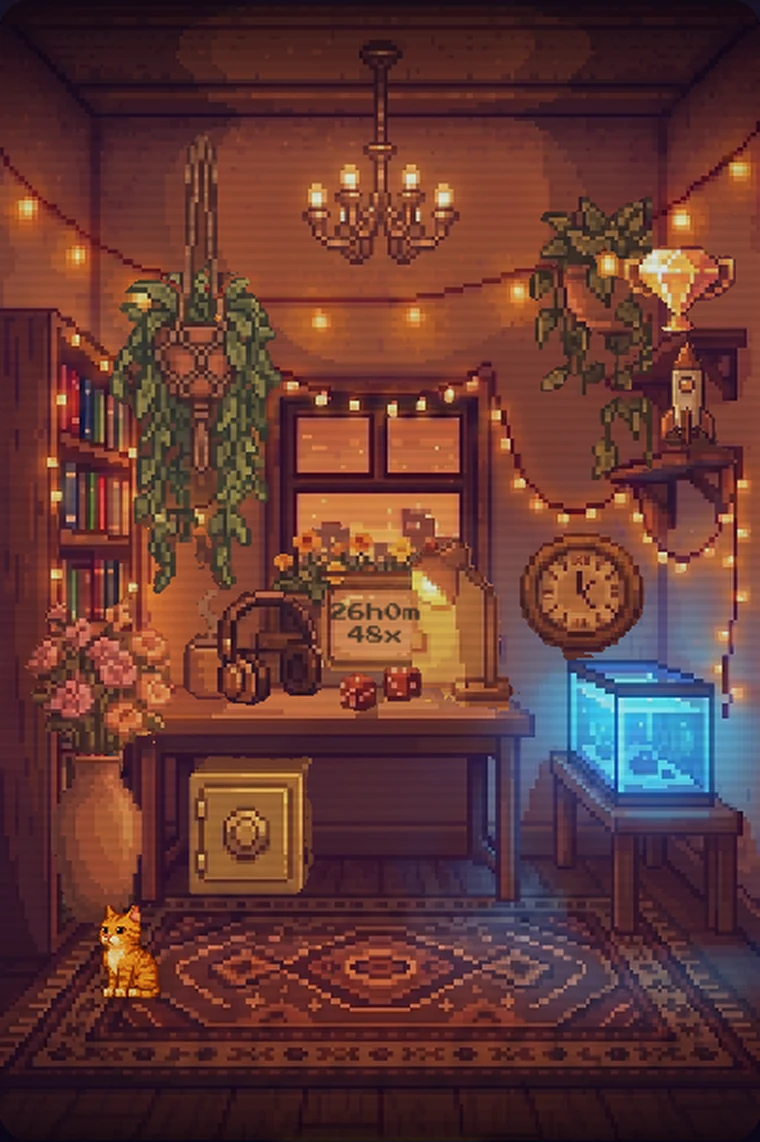
↑ a room a few weeks in
A reward you can predict stops registering once you've learned it's coming. An unpredictable one never stops. Slot machines are built on that gap.
Work one short block, then stop. It's been the answer to "I can't start" since the eighties, because the block is small enough to begin.
Every coin comes from a session you finished. A bad spin still pays something. Abandon one and you get nothing — the only punishment in the game.
The same trick that takes people's money. Here it's aimed at your attention instead.



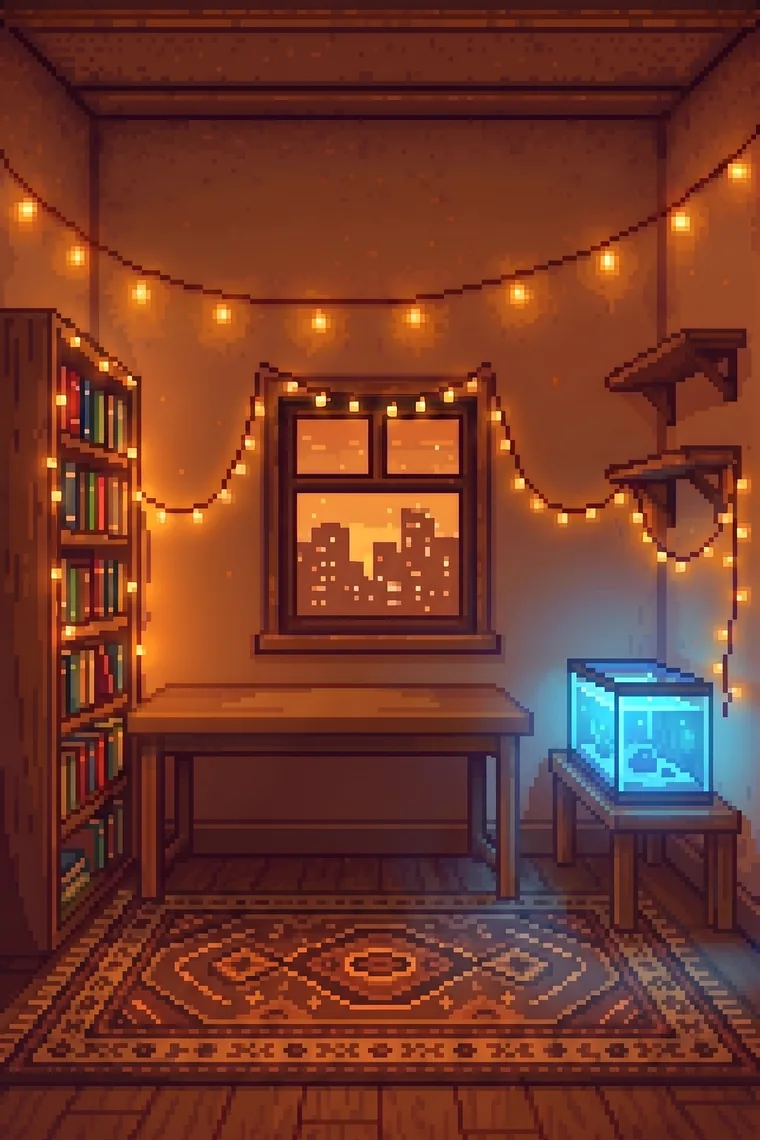
Session one
A desk, a window, a cat with opinions. Everything else, you buy with finished sessions.
Level 10
Four coins a minute, times whatever the reels landed on. A 45-minute session at Lucky Sevens is worth 590.
Level 11
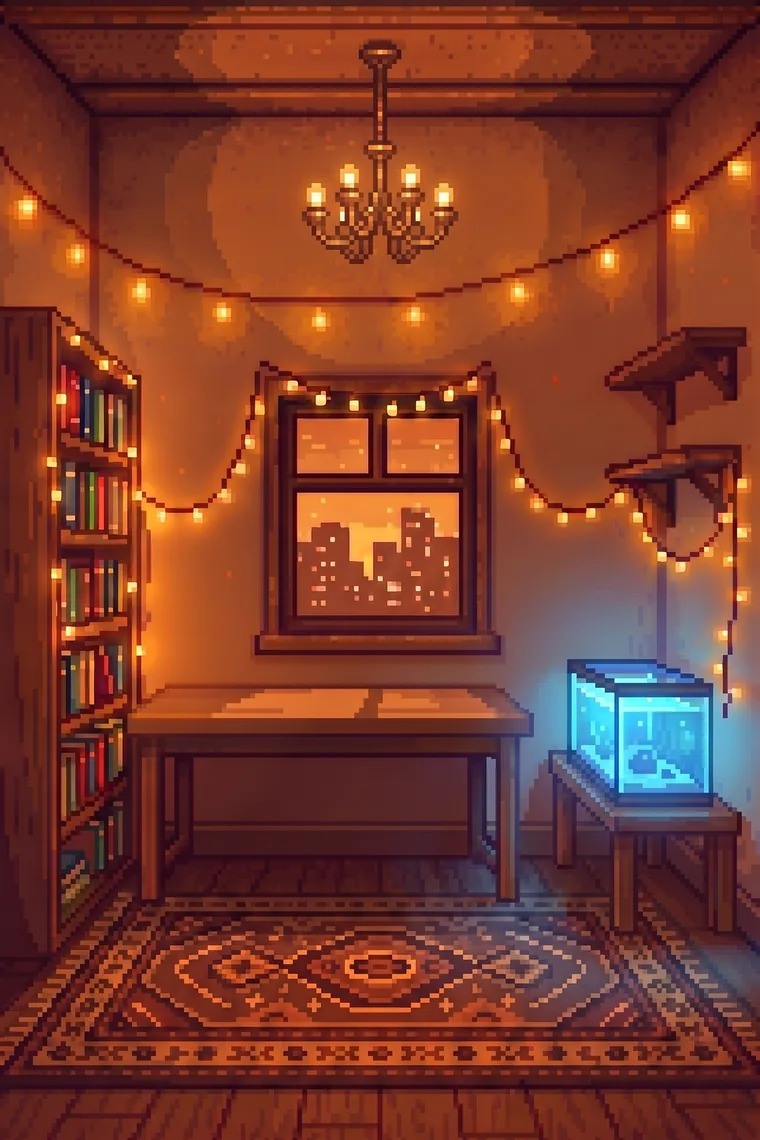
Each piece is painted into the room, so the window light falls across it properly. That's why they arrive in order.
Level 13
7,500 coins, and 145 pixels of desk — the tank has to stand somewhere.
Level 19
Every piece in here was a session you finished. The room is the record — and it is the good kind, the kind you add to.
Eventually
Hanging plants, a trophy shelf, headphones, a cat with somewhere to be. Unlike the furniture, most of these keep paying — better odds, faster coins, longer breaks.
Save it to your home screen and it opens like any other app: full screen, its own icon. It's all on the device by then, so it works with no signal.
Progress lives on the device. Signing in just carries a room to a second one, and the game never asks.